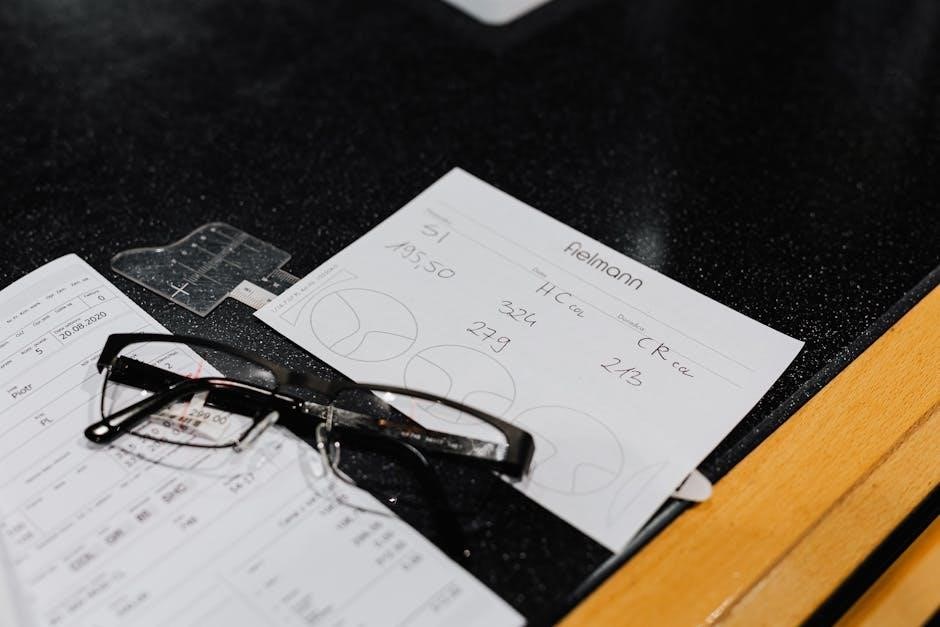
Understanding Reading Glasses Test Charts
Reading glasses test charts, often available as a PDF, are valuable tools for a preliminary self-assessment of your reading vision strength.
These charts help determine the appropriate diopter for over-the-counter reading glasses, offering a convenient initial check before a professional exam.
What are Reading Glasses Test Charts?
Reading glasses test charts, frequently found as downloadable PDF documents, are specifically designed to help individuals estimate the correct magnification needed for reading.
These charts consist of lines of text in varying sizes, progressively decreasing in font size as you move down the chart.
They are a convenient, initial method for gauging your reading vision, allowing you to identify the smallest print you can comfortably and clearly read at a standard distance – typically around 14 inches.
Resources like ReadingGlasses.com, Debby Burk Optical, and Peepers offer these charts for free download.
The Purpose of a Reading Glasses Test Chart
The primary purpose of a reading glasses test chart, often accessed as a PDF, is to provide a quick and easy self-assessment of your near vision.
It helps determine the appropriate diopter strength for over-the-counter reading glasses, assisting individuals experiencing difficulty reading small print.
By identifying the smallest line of text you can clearly read, you can estimate the magnification needed to correct your vision.
This chart serves as a preliminary step, not a replacement for a comprehensive eye exam.

Types of Reading Glasses Test Charts
Reading glasses test charts come in PDF, online, and standard diopter formats, offering varied accessibility. Printable PDF charts are popular for convenient self-testing.
Standard Diopter Charts
Standard diopter charts, frequently found as downloadable PDF files, present lines of text in decreasing sizes, each corresponding to a specific diopter strength. These charts are designed to help individuals identify the smallest line they can comfortably and clearly read.
This directly correlates to the appropriate magnification needed in reading glasses. Typically, these charts range from +1.00 to +4.00 diopters, covering the most common prescriptions for presbyopia. Utilizing a PDF version allows for easy printing and repeated testing, ensuring a reliable initial assessment of your reading vision.
Online Reading Tests vs. Printable Charts
Online reading tests offer convenience, but printable charts, especially in PDF format, provide greater control and reliability. Digital screens can vary in brightness and resolution, impacting accuracy. A printed PDF chart ensures consistent testing conditions, eliminating screen-related variables.
While online tests are quick, a PDF allows for repeated assessments under standardized lighting. Printable charts, downloaded from sources like ReadingGlasses.com, offer a tangible, repeatable method for determining your reading glasses strength, making them a preferred choice for many individuals.
PDF Format Advantages for Printable Charts
PDF (Portable Document Format) charts guarantee consistent rendering across different devices and printers, crucial for accurate results. Unlike other file types, PDFs preserve font sizes and layout, ensuring the test chart appears as intended by the creator.
Downloading a PDF from reputable sources like Debby Burk Optical or Peepers allows for high-quality printing. This format prevents unintended scaling or distortion during printing, vital for reliable self-assessment of reading glasses strength. PDFs are also easily saved and reprinted as needed.
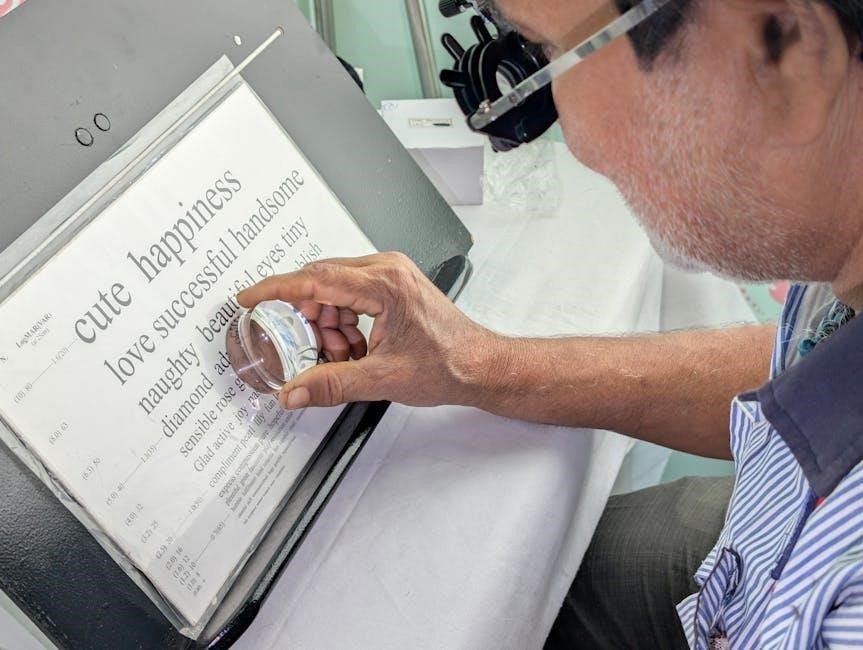
How to Use a Reading Glasses Test Chart (PDF)
To utilize a PDF reading glasses chart, download and print it from a reliable source like ReadingGlasses.com. Ensure proper lighting and follow the testing instructions carefully.
Preparation Before Testing
Before beginning the test with a PDF reading glasses chart, several preparatory steps are crucial for accurate results. First, download the chart from a trusted website like ReadingGlasses.com, Debby Burk Optical, or Peepers.
Next, print the chart using a standard printer and ensuring the scale remains accurate – avoid shrinking or stretching during printing. Crucially, remove any existing eyeglasses or contact lenses as these will interfere with the test.
Find a well-lit area, avoiding glare, and prepare to hold the chart at a consistent distance of approximately 14 inches from your eyes. A comfortable and focused environment is key to a reliable self-assessment.
Optimal Viewing Distance (14 Inches)
Maintaining a consistent 14-inch viewing distance is paramount when using a PDF reading glasses test chart. This distance is specifically recommended by experts like those at ReadingGlasses.com to ensure standardized results.
Measuring this distance accurately – using a ruler or simply holding the chart at arm’s length – minimizes distortion and provides a reliable assessment of your reading vision.
Deviating from this distance can significantly alter readability, leading to an incorrect determination of your required diopter strength. Consistent positioning is vital for a trustworthy self-test.
Removing Existing Eyewear
Before commencing the reading glasses test using a PDF chart, it is absolutely crucial to remove any existing corrective lenses, including glasses or contact lenses. This step is consistently emphasized by resources like ReadingGlasses.com and Debby Burk Optical;
Existing prescriptions will interfere with accurately gauging your need for reading magnification. The test aims to assess your unaided near vision.
Testing with your current glasses will yield inaccurate results, potentially leading to purchasing the wrong strength of reading glasses. Ensure a clear, unbiased assessment.
Testing Procedure: Reading Lines Top to Bottom
When utilizing a reading glasses test chart PDF, begin by holding the chart at the recommended 14-inch distance. Start reading from the top line and progress downward, line by line, as suggested by ReadingGlasses.com and Peepers.
Continue reading until you reach a line where the letters become noticeably blurry or difficult to discern.
The last line you can comfortably read clearly indicates your approximate reading glasses strength. Note this line, as it’s key to determining the correct diopter.
Interpreting the Results
Reading glasses test chart PDF results pinpoint your strength by matching the smallest clearly read line to its corresponding diopter value, as Debby Burk Optical suggests.
Finding Your Reading Glasses Strength
Determining the correct reading glasses strength using a PDF chart involves a systematic approach. Begin by carefully reading each line of text, starting with the largest and progressing to the smallest.
Pay close attention to the point where the letters begin to appear blurry or difficult to distinguish. The last line you can comfortably and clearly read indicates your approximate reading glasses strength.
ReadingGlasses.com emphasizes this process, advising users to stop at the smallest readable line. This line’s corresponding diopter value is a good starting point for selecting your glasses.
Matching Lines to Diopter Values
Once you’ve identified the smallest line you can clearly read on the PDF chart, the next step is to correlate that line with its corresponding diopter value.
Most charts, like those from Debby Burk Optical, clearly label each line with a specific diopter strength, typically ranging from +1.00 to +4.00.
Carefully locate the diopter number associated with your last readable line. This number represents the approximate magnification needed to correct your near vision. Remember, this is an estimate, and a professional exam is still recommended.
The Smallest Readable Line Determines Strength
The core principle of using a PDF reading glasses test chart is identifying the smallest line of text you can comfortably and clearly read.
Continue reading downwards, line by line, until you reach a point where the letters begin to appear blurry or difficult to distinguish.
The line immediately before the one you struggle with is the key indicator of your required reading glasses strength. This method, as highlighted by ReadingGlasses.com, provides a practical estimate for your diopter needs.
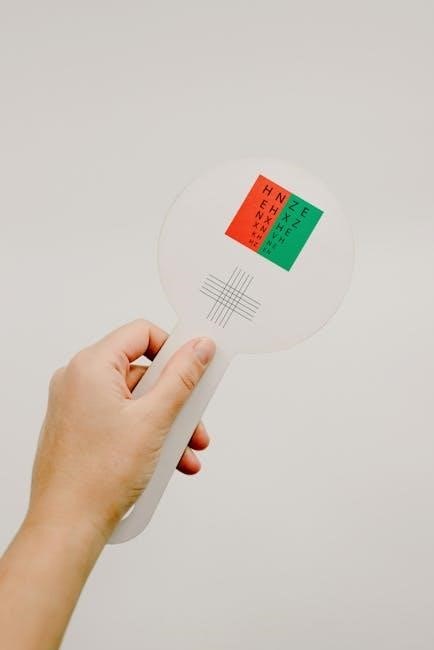
Diopter Scale Explained
Diopters measure the refractive power of a lens, with higher numbers indicating stronger magnification.
Reading glasses typically range from +1.00 to +4.00, as determined by a PDF chart assessment.
What is a Diopter?
A diopter is the unit of measurement used to express the refractive power of a lens, crucial when interpreting a reading glasses test chart PDF. Essentially, it quantifies how much a lens converges or diverges light. A higher diopter value signifies a stronger lens, providing greater magnification for closer objects.
Positive diopters, like those found in reading glasses (+1.00, +2.50, etc.), correct farsightedness (hyperopia) by helping the eye focus on nearby items. The PDF chart helps pinpoint the lowest diopter where text appears clear, indicating your required strength. Understanding diopters empowers informed self-assessment before seeking professional advice.
Common Diopter Strengths (+1.00 to +4.00)
When utilizing a reading glasses test chart PDF, you’ll typically encounter diopter strengths ranging from +1.00 to +4.00. +1.00 is often suitable for individuals experiencing very mild difficulty with close-up reading, while +2.00 is a frequently prescribed starting point.
Strengths of +2.50 and +3.00 address moderate reading challenges, and +4.00 is generally reserved for more significant farsightedness. The PDF chart assists in identifying the precise diopter within this range that delivers optimal clarity for comfortable reading.
Understanding Incremental Changes in Diopters
When reviewing a reading glasses test chart PDF, recognize that each incremental change in diopters – typically 0.25 or 0.50 – represents a subtle shift in magnifying power. A small increase can significantly improve readability, especially when determining your optimal strength.
Don’t dismiss seemingly minor differences; the goal is to find the lowest diopter that allows for clear, comfortable reading. The PDF chart helps pinpoint these subtle improvements, ensuring you select glasses that correct your vision without overcorrection.

Downloading and Printing PDF Charts
Reading glasses test chart PDFs are readily available from sites like ReadingGlasses.com, Debby Burk Optical, and Peepers.
Ensure accurate results by downloading and printing these charts for a convenient self-assessment.
Reliable Sources for PDF Charts (ReadingGlasses.com, Debby Burk Optical, Peepers)
ReadingGlasses.com provides a downloadable reading glasses strength chart PDF, emphasizing removing corrective lenses and maintaining a 14-inch viewing distance for accurate testing.
Debby Burk Optical offers a printable diopter chart, advising users to stop at the smallest clearly readable line to determine their ideal strength.
Peepers by PeeperSpecs also provides a PDF chart, enabling a quick self-check for determining appropriate reading glass strength within minutes.
These sources offer convenient, accessible tools for initial vision assessment.
Printer Settings for Accurate Results
To ensure the reading glasses test chart PDF yields reliable results, proper printer settings are crucial. Print at 100% scale – avoid options like “fit to page,” which distort the font sizes and invalidate the test.
Select standard paper quality for consistent line clarity.
Verify that the printed chart’s lines appear sharp and distinct; blurry prints compromise accuracy.
A test print is recommended before committing to the full chart to confirm correct scaling and print quality.
Paper Size and Quality Considerations
When printing a reading glasses test chart PDF, standard US letter size (8.5 x 11 inches) paper is generally recommended for accurate results. Avoid using smaller paper sizes as they may compress the chart.
The paper quality should be standard white printer paper – heavier cardstock isn’t necessary and may not print as clearly.
Ensure the paper is flat and free of wrinkles or creases, as these can distort the lines and affect readability.
Matte paper is preferable to glossy, reducing glare.
Limitations of Self-Testing
Reading glasses test chart PDFs offer a quick check, but aren’t a substitute for a comprehensive eye exam by a qualified professional.
Accuracy can vary.
Not a Substitute for a Professional Eye Exam
Reading glasses test chart PDFs are designed for initial self-screening and should never replace a thorough examination conducted by a licensed optometrist or ophthalmologist.
A professional eye exam assesses overall eye health, detects potential conditions beyond simple refractive error (like glaucoma or macular degeneration), and provides a precise prescription tailored to your individual needs.
Self-testing only estimates reading power; it cannot diagnose underlying issues or account for binocular vision problems, astigmatism complexities, or other factors impacting vision.
Regular professional exams are crucial for maintaining optimal eye health.
Potential for Inaccuracy
Reading glasses test chart PDFs, while convenient, are prone to inaccuracies due to several factors. Subjective interpretation of line clarity varies between individuals, leading to inconsistent results.
Print quality, lighting conditions, and even screen calibration (for online tests) can significantly affect the chart’s appearance and your ability to discern letters accurately.
Furthermore, self-administered tests lack the objective measurements and professional expertise of an eye exam, potentially resulting in an incorrect diopter estimation.
Therefore, treat results as a guideline, not a definitive prescription.
Factors Affecting Test Results (Lighting, Fatigue)
Several external elements can compromise the reliability of a reading glasses test chart PDF. Insufficient or glaring lighting drastically impacts clarity, making accurate assessment difficult.
Fatigue, especially eye strain from prolonged screen time, can distort vision and lead to misinterpretation of the chart’s lines.
Environmental distractions and the quality of your printer also play a role; a low-resolution print diminishes sharpness;
Ensure optimal conditions for a more dependable self-assessment, but remember a professional exam is crucial.
When to Consult an Eye Doctor
Reading glasses test chart PDF results are not a substitute for professional care; consult an eye doctor for persistent issues, discomfort, or vision changes.
Persistent Vision Problems
If you consistently experience blurry vision, even after attempting to correct it with reading glasses determined by a PDF chart, it’s crucial to seek professional evaluation.
A reading glasses test chart provides a basic assessment, but cannot diagnose underlying conditions like glaucoma, cataracts, or macular degeneration.
Ignoring persistent vision problems can lead to worsening symptoms and potential long-term damage.
An eye doctor can perform a comprehensive exam to identify the root cause and recommend appropriate treatment, ensuring optimal eye health.
Discomfort or Strain with Reading
Even if a reading glasses test chart PDF suggests a specific strength, experiencing discomfort or eye strain while reading indicates a potential issue.
Symptoms like headaches, tired eyes, or difficulty focusing aren’t normal, even with correction.
These sensations may signal an incorrect prescription, unaddressed astigmatism, or another underlying visual problem.
Self-testing with a chart is not a substitute for a professional eye exam, which can accurately assess your visual needs and ensure comfortable reading.
Changes in Vision
Noticing any sudden or gradual changes in your vision warrants a visit to an eye doctor, regardless of reading glasses test chart PDF results.
Fluctuations in clarity, blurred vision, or difficulty adapting to different distances shouldn’t be ignored.
These changes could indicate a developing eye condition unrelated to simple presbyopia, the age-related loss of near focus.
Regular professional eye exams are crucial for monitoring overall eye health and addressing any emerging vision problems promptly.
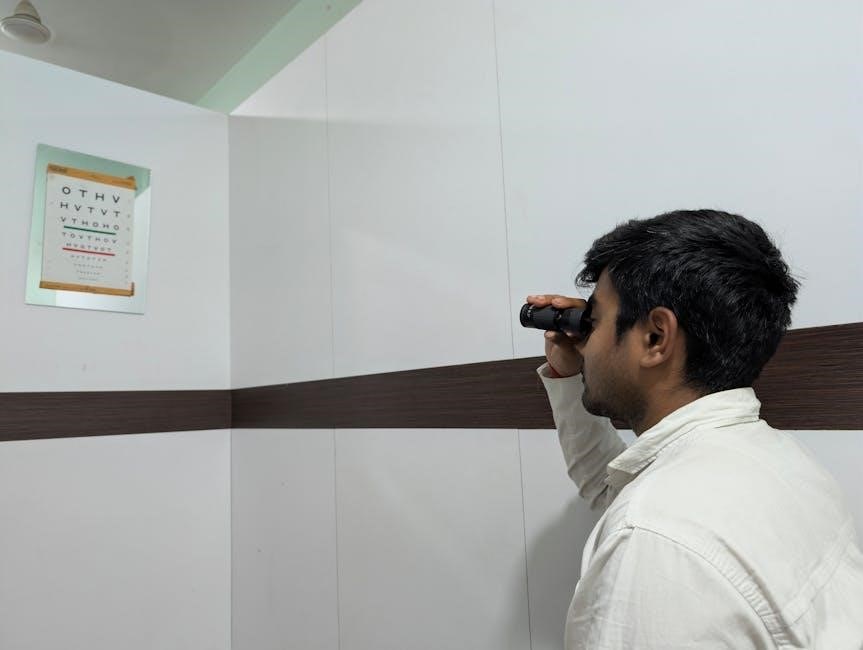
Reading Glasses Strength Chart Variations
Reading glasses strength charts, often PDF downloads, differ in font sizes and designs, catering to various age groups and visual needs for accurate testing.
Charts with Different Font Sizes
Reading glasses test chart PDFs aren’t uniform; they present text in varying font sizes to accommodate diverse visual acuities. Some charts begin with exceptionally large print, ideal for individuals with significant vision impairment, gradually decreasing in size.
Others start with smaller fonts, suitable for those with milder presbyopia.
The range of font sizes within a chart directly impacts the precision of the self-assessment. A wider range allows for a more granular determination of the correct diopter strength, ensuring clearer and more comfortable reading. Choosing a chart with appropriate font sizes is crucial for an effective self-test.
Charts Designed for Specific Age Groups
Reading glasses test chart PDFs sometimes cater to specific age demographics, recognizing that visual needs evolve with age. Charts designed for younger adults experiencing early presbyopia may feature smaller initial font sizes and a narrower diopter range.
Conversely, charts for older adults often start with larger print and extend to higher diopter values.
These age-specific designs aim to optimize the testing experience, providing a more accurate assessment based on typical vision changes associated with different life stages, improving self-selection.
Charts Including Astigmatism Assessment (Limited)
While most reading glasses test chart PDFs primarily focus on determining reading power (diopters), some attempt a very basic astigmatism assessment. These charts typically include patterns with lines radiating from a central point, or slightly distorted letter arrangements.
However, it’s crucial to understand these assessments are extremely limited.
They can only detect significant astigmatism and are not a substitute for a comprehensive eye exam performed by a qualified optometrist or ophthalmologist for accurate diagnosis.

Troubleshooting Common Issues
If PDF chart lines appear blurry, or letters are hard to distinguish, ensure proper lighting and printing quality. Inconsistent results may indicate fatigue or incorrect distance.
Blurry Lines on the Chart
Blurry lines on your printed reading glasses test chart PDF can stem from several easily addressable factors. First, verify your printer settings are optimized for sharp text output; a lower resolution can cause fuzziness.
Secondly, ensure adequate and consistent lighting – dim or flickering light significantly impacts clarity. The paper quality also matters; thicker paper prevents ink bleed-through, resulting in crisper lines.
Finally, double-check the viewing distance is precisely 14 inches, as deviations can introduce blur. If issues persist, try downloading the PDF again, as a corrupted file could be the culprit.
Difficulty Distinguishing Letters
Difficulty distinguishing letters on a reading glasses test chart PDF often indicates an insufficient reading glasses strength. If you struggle with smaller text, it suggests you need a higher diopter to correct your vision.
However, ensure proper lighting and a clean PDF printout, as these can mimic vision problems. Fatigue and eye strain can also contribute to this issue; take breaks during testing.
If the problem persists even with a clear chart and adequate rest, it’s a strong indicator you require a professional eye exam for a precise prescription.
Inconsistent Results
Inconsistent results when using a reading glasses test chart PDF are common and highlight the limitations of self-testing. Variations in lighting, distance from the chart, or even daily fluctuations in vision can cause discrepancies.
Ensure you maintain a consistent 14-inch viewing distance and optimal lighting each time you test. If results differ significantly between attempts, it suggests the need for a professional eye exam.
Self-tests are a guide, not a definitive diagnosis; professional assessment is crucial for accurate correction.
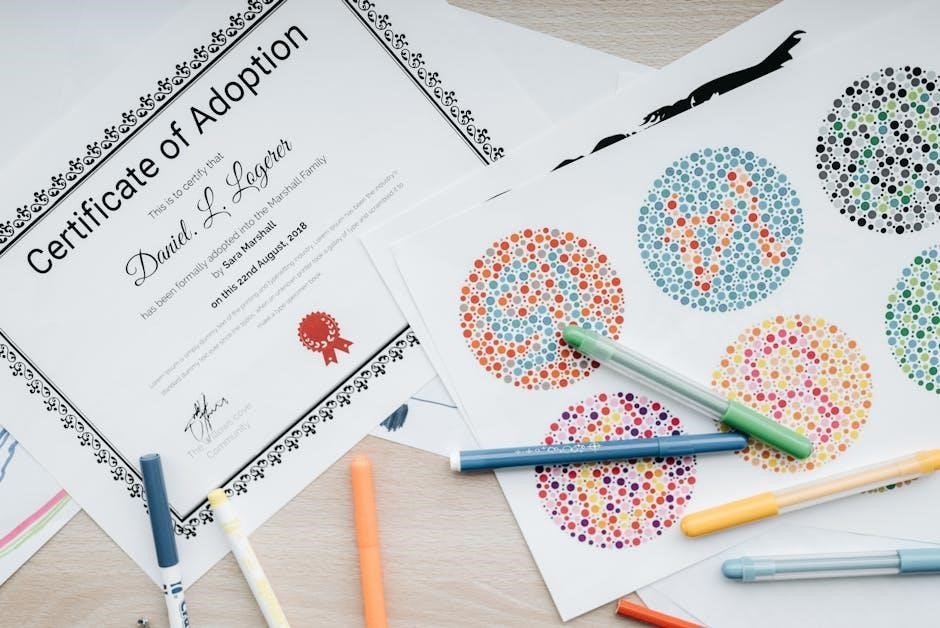
The Role of Accommodation in Reading
Accommodation is your eyes’ ability to focus at varying distances; it diminishes with age (presbyopia). A reading glasses test chart PDF assesses this loss, aiding appropriate lens selection.
How Your Eyes Focus at Different Distances
Your eyes naturally adjust focus through a process called accommodation, utilizing the ciliary muscle and lens. For distant objects, these relax, flattening the lens. Conversely, when reading – a near task – the ciliary muscle contracts, thickening the lens to bend light correctly onto the retina.
As we age, this lens loses flexibility, making near focus increasingly difficult. A reading glasses test chart PDF helps gauge this diminished ability. The chart’s varying font sizes challenge your accommodation, revealing the point where assistance is needed for clear reading.
Essentially, the test mimics the demands placed on your eyes during typical reading activities.
Age-Related Loss of Accommodation (Presbyopia)
Presbyopia, commonly appearing around age 40, is the gradual loss of the eye’s ability to focus on nearby objects. This isn’t a disease, but a natural consequence of aging, impacting everyone. The lens inside the eye becomes less flexible, hindering its ability to change shape for close-up vision.
A reading glasses test chart PDF becomes useful as presbyopia progresses, helping determine the appropriate magnification needed to compensate for this reduced focusing power. It identifies the smallest print you can comfortably read, indicating your required diopter strength.
Essentially, it’s a practical way to address the effects of presbyopia.
Choosing the Right Reading Glasses After Testing
Reading glasses, determined using a PDF chart, come in various styles and materials. Consider lens coatings like anti-reflective or blue light blocking for enhanced comfort.
Frame Styles and Materials
Reading glasses frames significantly impact both aesthetics and comfort, so choosing wisely is crucial after determining your strength via a PDF chart. Common frame materials include plastic (acetate), metal (stainless steel, titanium), and even wood.
Plastic frames offer a wide range of colors and patterns, are lightweight, and generally more affordable. Metal frames provide durability and a sleek, modern look. Titanium is hypoallergenic and exceptionally strong, though pricier.
Frame styles vary from full-rim, offering maximum coverage, to semi-rimless or rimless for a minimalist appearance. Consider your face shape when selecting a style for the most flattering fit.
Lens Coatings (Anti-Reflective, Blue Light Blocking)
Once you’ve identified your reading glasses strength using a PDF chart, consider lens coatings to enhance your visual experience. Anti-reflective (AR) coatings minimize glare, improving clarity and reducing eye strain, especially in low-light conditions.
Blue light blocking coatings filter out harmful blue light emitted from digital screens, potentially reducing digital eye strain and promoting better sleep.
These coatings are available as add-ons and can significantly improve comfort and visual performance, complementing the correct diopter determined through self-testing.

Resources for Further Information
The American Optometric Association (AOA) and National Eye Institute (NEI) offer comprehensive eye health information and resources beyond PDF chart self-tests.
American Optometric Association (AOA)
The American Optometric Association (AOA) is a leading authority on vision care, providing extensive resources about eye health and comprehensive eye exams. While reading glasses test chart PDFs offer a quick self-assessment, the AOA emphasizes that these are not replacements for professional evaluations.
Their website, www.aoa.org, features articles on presbyopia, the age-related loss of near vision that often necessitates reading glasses, and the importance of regular eye check-ups.
The AOA can help you locate a qualified Doctor of Optometry in your area for a thorough assessment of your vision needs, ensuring optimal eye health and appropriate corrective lenses.
National Eye Institute (NEI)
The National Eye Institute (NEI), part of the National Institutes of Health, is dedicated to conducting and supporting research on vision and eye diseases. While reading glasses test chart PDFs can provide a preliminary indication of reading vision, the NEI stresses the importance of professional eye care.
Their website, www.nei.nih.gov, offers detailed information about conditions like presbyopia and age-related macular degeneration, which can affect reading ability.
The NEI promotes public awareness of eye health and encourages regular comprehensive eye exams performed by qualified eye care professionals for accurate diagnosis and treatment.
Leave a Reply
You must be logged in to post a comment.