
LAPD Manual: A Comprehensive Overview (Updated 04/22/2026)
This manual consolidates current LAPD policies, procedures, and rules, detailing the department’s structure, responsibilities, and employee functions as of today’s date.
The Los Angeles Police Department Manual serves as the foundational document governing all departmental operations and personnel conduct. It’s a dynamic resource, continually updated to reflect evolving legal standards, best practices in law enforcement, and the unique needs of the City of Los Angeles. This comprehensive manual isn’t merely a collection of rules; it’s a commitment to professionalism, accountability, and effective policing.
It outlines the organizational framework of the LAPD, clarifying roles and responsibilities at every level. Furthermore, it details the policies and procedures that guide officers in their daily duties, ensuring consistency and fairness in all interactions with the public. Access to this manual is crucial for both internal stakeholders and external oversight bodies.

II. Purpose and Scope of the Manual
The primary purpose of the LAPD Manual is to establish a clear and consistent framework for all departmental actions, ensuring legal compliance and operational effectiveness. Its scope encompasses every aspect of policing within the jurisdiction of the Los Angeles Police Department, from routine patrol duties to complex criminal investigations.
This manual details the responsibilities and functions of each department employee, providing guidance on proper procedures and ethical conduct. It applies to all sworn officers, civilian personnel, and volunteers operating under the authority of the LAPD. The manual’s reach extends to policies governing equipment use, investigative techniques, and interactions with the community.
III. Organizational Structure of the LAPD
The Los Angeles Police Department’s organizational structure is designed to facilitate efficient command and control, effective resource allocation, and coordinated responses to diverse law enforcement challenges. The manual meticulously outlines this structure, clarifying lines of authority and responsibility throughout the department.
It details the hierarchical command structure, from the Chief of Police down to individual officers, and identifies the various divisions and specialized units within the LAPD. This includes geographic divisions responsible for specific areas of the city, as well as specialized units focused on areas like homicide, narcotics, and traffic enforcement.
III.A. Command Structure
The LAPD’s command structure is fundamentally hierarchical, ensuring clear lines of authority and accountability throughout the organization. This structure begins with the Chief of Police, who provides overall leadership and direction. Below the Chief are various Bureau Commanders, each responsible for a major operational area within the department.
These Bureau Commanders oversee Divisions, led by Commanding Officers, who are responsible for the day-to-day operations of their respective areas. Further down the chain of command are Watch Commanders, Lieutenants, Sergeants, and ultimately, patrol officers. This tiered system facilitates effective communication and coordinated responses to incidents.
III.B. Divisions and Units
The LAPD is organized into various geographic Divisions, each responsible for policing a specific area of Los Angeles. These Divisions are further comprised of specialized Units designed to address unique challenges and needs. Examples include Detective Units focusing on criminal investigations, Traffic Divisions managing roadway safety, and Community Relations Units fostering positive police-community partnerships.
Additionally, the LAPD maintains specialized units such as the SWAT team for high-risk situations, the Air Support Division providing aerial surveillance, and the Gang and Narcotics Division targeting organized crime. The Los Angeles Port Police also operates as a distinct unit, focusing on security within port facilities.
IV. Core Principles and Values
The Los Angeles Police Department operates under a framework of core principles and values designed to guide officer conduct and maintain public trust. Central to this is a commitment to community policing, emphasizing collaborative partnerships with residents and local organizations to proactively address crime and quality-of-life issues.
Furthermore, the LAPD prioritizes de-escalation techniques, equipping officers with the training and tools to resolve conflicts peacefully whenever possible. Integrity, fairness, and respect for all individuals are paramount, alongside a dedication to upholding the Constitution and the law. These values shape every aspect of departmental operations.
IV.A. Community Policing Philosophy
The LAPD’s Community Policing Philosophy centers on building trust and collaborative partnerships with the communities it serves. This proactive approach moves beyond traditional reactive policing, focusing on identifying and addressing the root causes of crime and disorder. Officers are encouraged to engage residents, businesses, and community organizations to foster open communication and shared problem-solving.
This philosophy recognizes that police effectiveness is inextricably linked to community support and cooperation. By working with the community, rather than simply in the community, the LAPD aims to create safer, more resilient neighborhoods and enhance the overall quality of life for all residents.

IV.B. Emphasis on De-escalation
The LAPD prioritizes de-escalation techniques as a core component of its response to resistance and potential use of force situations. Officers are trained to utilize communication, tactical repositioning, and time to attempt to resolve conflicts without resorting to physical force. This commitment reflects a dedication to preserving life and minimizing harm to all involved – officers, subjects, and the public.
De-escalation is not simply a tactic, but a mindset. It requires patience, empathy, and a willingness to explore all available alternatives before employing force. Continuous training and evaluation ensure officers are equipped with the skills and judgment necessary to effectively de-escalate tense encounters.
V. General Orders and Policies
This section outlines the foundational rules governing LAPD operations, ensuring consistency and accountability across all ranks and divisions. General Orders establish broad departmental expectations, while specific policies detail procedures for various scenarios. These directives cover a wide range of topics, including use of force, pursuit procedures, and interactions with the public.

Adherence to these orders and policies is mandatory for all personnel. Regular review and updates are conducted to reflect evolving legal standards, best practices, and community needs. The aim is to provide clear guidance, promote professional conduct, and maintain public trust in the Los Angeles Police Department;

V.A. Use of Force Continuum
The Use of Force Continuum provides a graduated framework for officers responding to resistance, emphasizing de-escalation whenever feasible. It outlines a series of response options, ranging from officer presence to deadly force, each justified by the level of threat presented by a subject.
Officers are trained to select the least amount of force necessary to control a situation effectively. This continuum is not a rigid escalation, but a dynamic assessment of each encounter. Thorough documentation of any force used is required, alongside justification aligning with departmental policy and legal standards.
V.B. Pursuit Procedures
LAPD pursuit procedures prioritize public safety, balancing the need to apprehend suspects with the risks associated with high-speed chases. Initiating a pursuit requires probable cause that a felony has been committed and the immediate danger to the public outweighs the risks of the chase itself.
Strict guidelines govern pursuit tactics, including speed, route selection, and the use of vehicle maneuvers. Continuous risk assessment is crucial; pursuits must be terminated if the danger escalates or the suspect’s identity is known. Detailed reporting and review of all pursuits are mandatory.
VI. Equipment Use Policies
The LAPD maintains rigorous equipment use policies to ensure officer safety and accountability. These policies cover a wide range of items, from firearms and less-lethal weaponry to communication devices and vehicles. Proper training and adherence to established protocols are paramount for all personnel.
Detailed guidelines dictate the appropriate handling, deployment, and maintenance of each piece of equipment. Regular inspections and documentation are required to verify compliance. Policies emphasize responsible stewardship of resources and the minimization of risks associated with equipment usage.
VI.A. Firearm Handling and Deployment
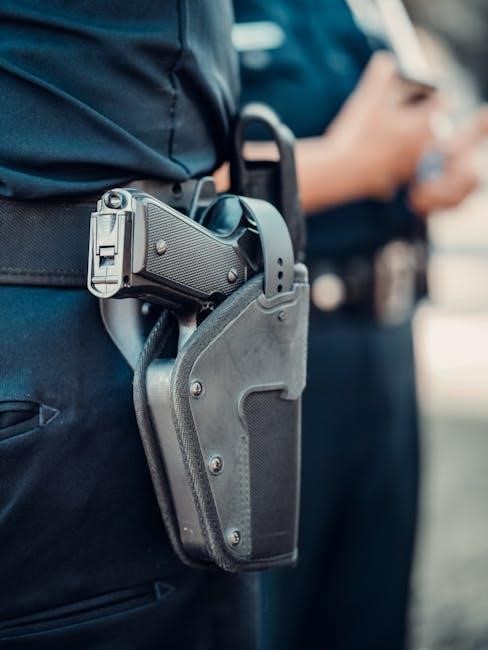
LAPD firearm policies prioritize safety, accuracy, and responsible use of force. Officers receive extensive training in safe firearm handling, storage, and maintenance. Deployment is governed by a strict use of force continuum, requiring justification based on the totality of circumstances.
Detailed protocols outline proper shooting techniques, target identification, and post-incident procedures. Regular qualifications and proficiency drills are mandatory to maintain competency. All firearm discharges are subject to thorough review and documentation, ensuring accountability and adherence to departmental standards.
VI.B. Less-Lethal Weaponry Guidelines
The LAPD utilizes less-lethal options to de-escalate situations and minimize injury. These include tasers, pepper spray (OC), and impact munitions, each with specific deployment guidelines. Officers are trained to assess situations and select the appropriate less-lethal tool based on the threat level and subject’s behavior.

Policies emphasize proper aiming, range, and documentation of less-lethal deployments. Medical monitoring of subjects exposed to these tools is crucial, alongside detailed reporting of each incident. The department continually evaluates the effectiveness and safety of less-lethal weaponry, adapting guidelines as needed.
VII. Investigative Procedures
LAPD investigative procedures prioritize thoroughness and adherence to legal standards. Crime scene management focuses on securing the area, documenting initial observations, and identifying potential evidence. Evidence collection follows strict protocols to maintain chain of custody and prevent contamination, ensuring admissibility in court.
Investigators are trained in various techniques, including interviewing witnesses, analyzing forensic evidence, and utilizing surveillance technology. All investigative actions must be documented meticulously, detailing the rationale behind each step and the findings obtained. These procedures aim to build strong cases and ensure justice is served.
VII.A. Crime Scene Management
Effective crime scene management is crucial for successful investigations. The initial responding officer’s primary duty is to secure the scene, establishing a defined perimeter to prevent unauthorized access and protect potential evidence. Detailed documentation, including photographs and sketches, captures the scene’s original condition.
A systematic search for evidence is then conducted, utilizing appropriate techniques based on the scene’s characteristics. All items of evidence are carefully collected, packaged, and labeled, maintaining a strict chain of custody. Proper crime scene management minimizes contamination and ensures the integrity of the investigation.
VII.B. Evidence Collection and Preservation
Maintaining the integrity of evidence is paramount. All collected items must be meticulously documented, noting the date, time, location, and collecting officer. Proper packaging prevents contamination, cross-transfer, and loss of evidence; each item receives unique labeling.
A strict chain of custody must be maintained, recording every transfer of evidence from collection to courtroom presentation. This detailed record ensures admissibility in court. Evidence preservation techniques vary based on the item’s nature, requiring specialized handling for fragile or biological materials.
VIII. Arrest Procedures
Lawful arrest procedures are critical, demanding adherence to constitutional standards. Arrests require probable cause – facts and circumstances justifying a reasonable belief a crime has been committed. Officers must articulate this cause clearly in reports.
Prior to interrogation, suspects must be informed of their Miranda rights: the right to remain silent, and the right to an attorney. A knowing, intelligent, and voluntary waiver is required before questioning. Proper documentation of these rights and waivers is essential for legal defensibility.
VIII.A; Probable Cause Requirements
Establishing probable cause is fundamental to lawful arrests, requiring facts and circumstances sufficient to warrant a reasonable person’s belief that a crime occurred and the suspect committed it. This isn’t absolute certainty, but a fair probability based on articulable facts.
Evidence supporting probable cause can include direct observation, reliable informant tips, and circumstantial evidence. Officers must be able to clearly articulate the basis for their belief in a detailed report, demonstrating a nexus between the suspect and the alleged offense.
VIII.B. Miranda Rights and Warnings
Prior to custodial interrogation, suspects must be informed of their Fifth Amendment rights, as established by Miranda v. Arizona. This includes the right to remain silent, and that any statement they make may be used against them in court.
Furthermore, suspects must be informed of their right to an attorney, and that one will be appointed if they cannot afford one. A knowing, intelligent, and voluntary waiver of these rights is required before questioning can proceed. Documentation of these warnings and the waiver is crucial for admissibility.
IX. Reporting and Documentation
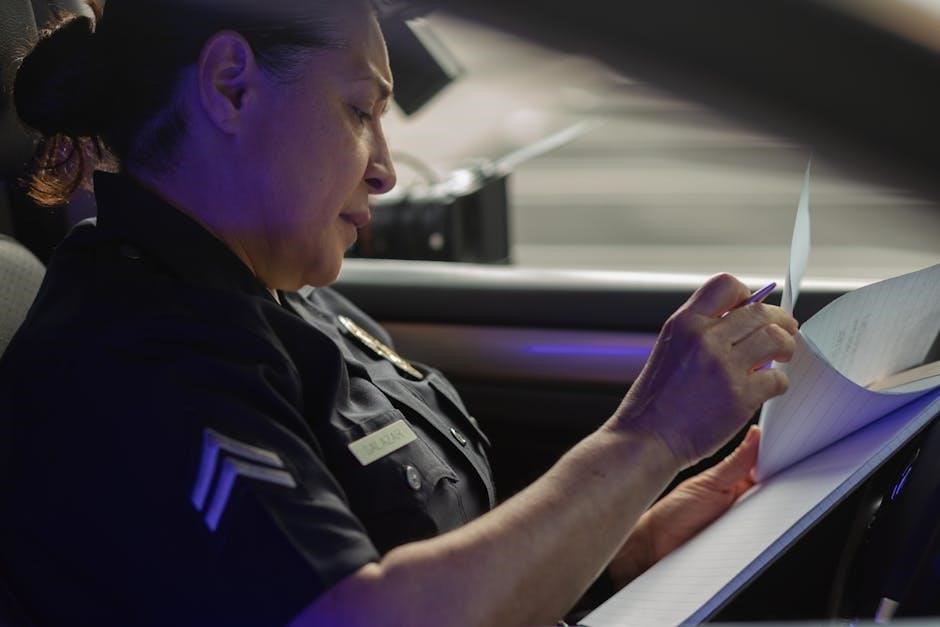
Accurate and timely reporting is paramount within the LAPD. All incidents, regardless of severity, require comprehensive documentation utilizing established protocols. This includes detailed narratives, witness statements, and any supporting evidence collected at the scene.
Specific attention must be given to Use of Force reporting, adhering to strict guidelines for justification and documentation. Proper reporting ensures transparency, accountability, and facilitates thorough investigations. Maintaining meticulous records is essential for legal compliance and departmental oversight.
IX.A. Incident Reporting Protocols
All LAPD personnel are mandated to document all incidents encountered during duty, utilizing the Department’s designated reporting system. Reports must be submitted promptly, adhering to specified timelines based on incident severity. These reports require detailed narratives, including time, location, involved parties, and a clear description of events.
Accuracy and completeness are critical; any omissions or inaccuracies can compromise investigations. Supervisors are responsible for reviewing reports to ensure compliance with these protocols and departmental standards, fostering accountability and transparency throughout the reporting process.
IX.B. Use of Force Reporting
Any application of force by LAPD personnel, regardless of severity, necessitates a comprehensive report. This report must detail the circumstances leading to the force, the type of force used, and the justification for its application, aligning with the Use of Force Continuum.

Detailed documentation is paramount, including any injuries sustained by involved parties. Supervisors will conduct thorough reviews of these reports, ensuring adherence to policy and identifying potential areas for improvement. These reports contribute to ongoing evaluations of force tactics and departmental training initiatives.
X. Internal Affairs and Accountability
The LAPD’s Internal Affairs Group (IAG) is responsible for investigating allegations of misconduct against department personnel. This includes examining complaints from the public, as well as proactively identifying potential policy violations. Transparency and impartiality are cornerstones of the IAG’s operations, ensuring fair and thorough investigations.
Accountability is paramount; substantiated findings can lead to disciplinary actions, ranging from counseling to termination. The IAG works to maintain public trust and uphold the highest ethical standards within the department, fostering a culture of integrity and professionalism.
X.A. Complaint Procedures
Citizens can file complaints regarding LAPD personnel conduct through various channels: online, by mail, or in person at any LAPD station. All complaints are documented and assigned a tracking number. The IAG acknowledges receipt and initiates a preliminary assessment to determine the appropriate course of action.
Complaints can allege excessive force, discourtesy, or violations of department policy. The process includes interviews with involved parties and potential witnesses. Confidentiality is maintained to the extent permitted by law, protecting both complainants and officers during the investigation.
X.B. Disciplinary Actions
Disciplinary actions are commensurate with the severity of the misconduct, following a thorough investigation and due process. Potential penalties range from counseling and retraining to suspension, demotion, or termination of employment. The Board of Rights, comprised of officers and civilians, reviews serious cases and makes recommendations to the Chief of Police.
All disciplinary actions are documented and maintained in the officer’s personnel file. Officers have the right to appeal disciplinary decisions through established grievance procedures. Transparency and fairness are paramount in ensuring accountability and maintaining public trust in the LAPD.
XI. Training and Professional Development
Comprehensive training is fundamental to the LAPD’s mission, encompassing initial academy instruction and ongoing professional development. Recruits receive extensive training in law, tactics, community policing, and de-escalation techniques. In-service training covers legal updates, policy changes, and specialized skills like crisis intervention and advanced investigations.
The LAPD prioritizes leadership development programs to cultivate future leaders. Continuing education opportunities, including seminars and certifications, are encouraged. This commitment to training ensures officers are equipped with the knowledge and skills to effectively serve and protect the community.
XII. Specific Policies ⎻ Traffic Enforcement
Traffic enforcement policies within the LAPD aim to enhance public safety and reduce collisions. Officers are guided by established protocols for traffic stops, investigations of accidents, and the issuance of citations. Emphasis is placed on enforcing laws related to impaired driving, speeding, and distracted driving, all major contributors to traffic-related incidents.
Policies also address pedestrian safety, bicycle regulations, and commercial vehicle enforcement. Data-driven approaches are utilized to identify high-collision areas and deploy resources effectively. Training ensures officers are current on traffic laws and best practices for safe and equitable enforcement.
XIII. Specific Policies ⎻ Crowd Control
LAPD crowd control policies prioritize public safety and the constitutional rights of individuals during large gatherings and protests. Officers receive specialized training in de-escalation techniques, less-lethal weaponry deployment, and effective communication strategies. The goal is to manage crowds peacefully while minimizing disruption and preventing violence.
Policies outline procedures for establishing perimeters, providing clear instructions, and responding to unlawful behavior. Emphasis is placed on proportionality, using the minimum force necessary to maintain order. Documentation of all crowd control actions is mandatory, ensuring accountability and transparency.
XIV. Specific Policies ‒ Handling of Sensitive Information
The LAPD maintains strict policies regarding the handling of sensitive information, encompassing confidential investigations, personal data, and intelligence gathering. These policies aim to protect individual privacy, maintain operational security, and comply with legal requirements. Access to sensitive information is restricted to personnel with a legitimate need-to-know basis.
Protocols dictate secure storage, transmission, and destruction of sensitive materials, both physical and digital. Employees undergo thorough background checks and receive training on data security best practices. Violations of these policies can result in disciplinary action and potential criminal charges.
XV. Relationship with Other Law Enforcement Agencies
The LAPD actively collaborates with federal, state, and local law enforcement agencies to enhance public safety and address regional crime trends. Mutual aid agreements facilitate resource sharing during large-scale events or emergencies, ensuring a coordinated response. Joint task forces are established to investigate complex criminal enterprises that transcend jurisdictional boundaries.
Information sharing is governed by established protocols to protect sensitive data and maintain legal compliance. Regular communication and training exercises foster interoperability and strengthen partnerships. The LAPD prioritizes a collaborative approach to law enforcement, recognizing the importance of unified efforts.
XVI. Policies Regarding Body-Worn Cameras
Body-worn cameras (BWCs) are deployed to enhance transparency, accountability, and evidence collection. LAPD policy mandates activation during all patrol interactions involving potential use of force or citizen complaints. Recordings are retained according to established schedules, balancing privacy concerns with evidentiary needs.
Officers receive comprehensive training on BWC operation, data management, and relevant legal considerations. Access to recordings is restricted to authorized personnel, and strict protocols govern their release to the public or during legal proceedings. The LAPD views BWCs as a vital tool for building trust and improving policing practices.
XVII. Policies Regarding Vehicle Operations
LAPD vehicle operation policies prioritize safety for officers, the public, and suspects. Strict guidelines govern pursuit initiation and continuation, emphasizing risk assessment and de-escalation tactics. Emergency vehicle operation requires authorized justification and adherence to established protocols, including speed limits and siren usage.
Regular vehicle maintenance and inspections are mandatory to ensure operational readiness. Officer training covers defensive driving techniques, pursuit tactics, and emergency vehicle handling. The department emphasizes responsible vehicle operation to minimize accidents and maintain public trust, adhering to all traffic laws.
XVIII. Policies Concerning Use of Technology
The LAPD embraces technology to enhance public safety and operational efficiency, but its use is governed by strict policies. Guidelines address data privacy, digital evidence handling, and responsible use of surveillance systems. Body-worn cameras are a key component, with policies dictating activation, storage, and access to footage, ensuring accountability.
Policies also cover the use of computer-aided dispatch (CAD) systems, mobile data terminals (MDTs), and analytical tools. Regular training is provided to officers on proper technology utilization and data security protocols. The department prioritizes ethical and legal compliance in all technological applications.
XIX. The Role of the Manual in Legal Compliance
This LAPD Manual serves as a critical instrument in ensuring departmental actions align with federal, state, and local laws. Policies detailed within are regularly reviewed and updated to reflect evolving legal standards and court decisions. Adherence to the manual’s guidelines demonstrates a commitment to constitutional policing and minimizes legal risks.
The manual provides officers with clear direction on lawful procedures, covering areas like search and seizure, arrest protocols, and use of force. Proper documentation, as outlined in the manual, is essential for defending against legal challenges. Compliance is paramount for maintaining public trust and upholding the integrity of the department.
XX. Updates and Revisions to the Manual
The LAPD Manual undergoes continuous review and revision to maintain its relevance and effectiveness. Updates are driven by changes in legislation, court rulings, departmental experience, and best practices in law enforcement. Revisions are meticulously documented, including the date of change and the rationale behind it.
A dedicated team within the department is responsible for monitoring legal developments and proposing necessary amendments. Quarterly reviews, like the Q4 2024 Equipment Use guidelines, ensure policies remain current. All personnel are notified of updates, and training is provided to ensure understanding and consistent application of revised procedures.
XXI. Accessing the LAPD Manual
The LAPD Manual is a vital resource for all personnel and the public. Access is facilitated through multiple channels to ensure broad availability. Authorized LAPD employees can access the most current version via a secure internal network, requiring specific login credentials for security purposes.
Limited public access is provided through the department’s official website, offering a selection of publicly releasable policies and procedures. Requests for specific information not available online can be submitted through a formal public records request process. Maintaining transparency while protecting sensitive operational details is paramount.
XXII. Policies Related to the Los Angeles Port Police
The Los Angeles Port Police operate under a comprehensive framework of policies aligned with, yet specifically tailored to, the unique environment of the Port of Los Angeles. These policies encompass all current standards, practices, operating procedures, and training materials.

Coordination with the LAPD is crucial, ensuring consistency in core law enforcement principles. However, Port Police policies address specific challenges related to maritime security, cargo theft, and international trade. Community engagement is a key focus, fostering positive relationships with port stakeholders and the surrounding communities, reflecting a commitment to collaborative policing.
XXIII. Objective-Oriented Policies vs. Procedures
LAPD policies and procedures are fundamentally objective-oriented, designed to achieve specific, measurable outcomes in law enforcement operations. However, a critical distinction exists between the two. Policy establishes the limits of acceptable action, defining what is permissible within legal and ethical boundaries.
Conversely, procedure directs the response within those established limits, detailing how officers should act in specific situations. This ensures consistency and accountability. Effective policing relies on a clear understanding of this difference, enabling officers to navigate complex scenarios appropriately.
XXIV. Future Developments and Manual Updates
The LAPD Manual is a living document, subject to continuous review and revision to reflect evolving legal standards, best practices in policing, and emerging technologies. Future updates will prioritize integrating lessons learned from field operations and community feedback.
Anticipated developments include expanded guidance on de-escalation techniques, refined policies regarding body-worn camera usage, and protocols for navigating increasingly sophisticated cybercrime threats. Regular updates, clearly dated, will ensure officers have access to the most current and effective guidelines for professional conduct and public safety.
Leave a Reply
You must be logged in to post a comment.